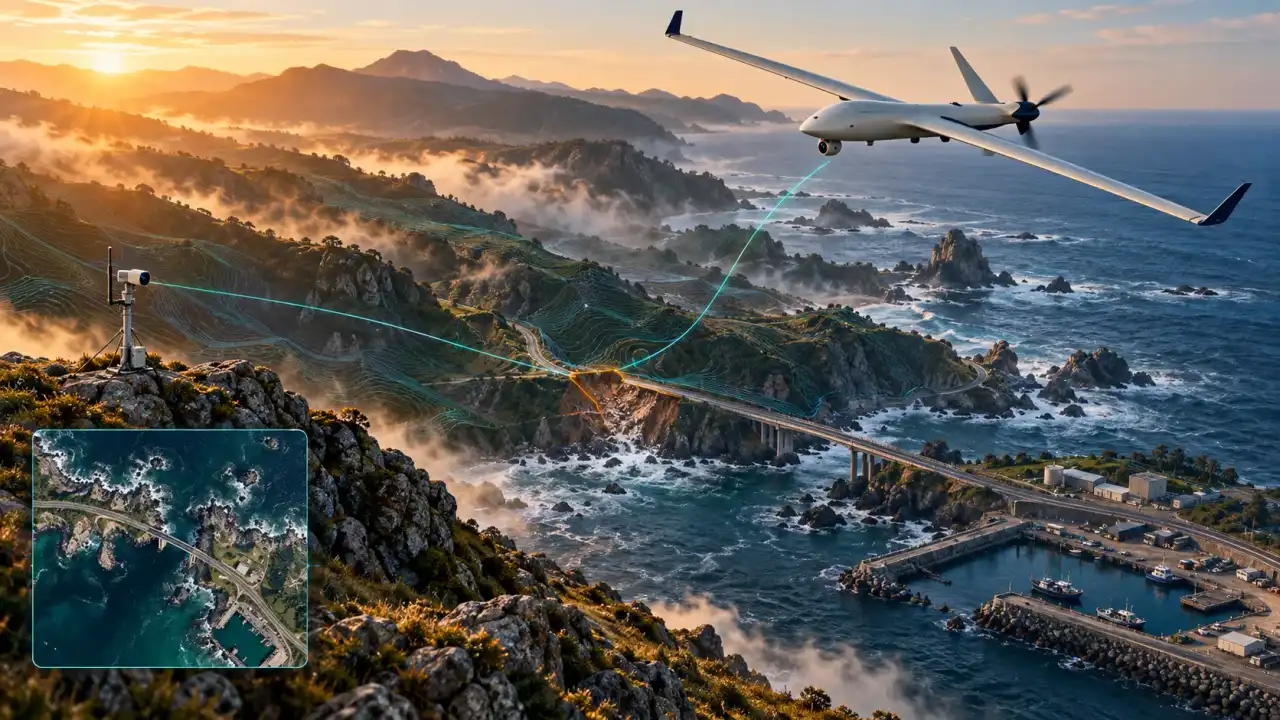
The sensor saw it. The feed recorded it. But the person who could respond never got the warning in time.
In a fast-moving operation, that is the difference between having data and having situational awareness. A satellite pass, drone camera or ground sensor may already have captured the signal that matters. If it stays buried in a separate system or waits for someone to relay it, its value fades by the minute.
The problem is not simply how much an organization can observe. It is how quickly it can turn an observation into a shared, actionable picture.
02More Feeds. Less Clarity.
Defense and civil security teams can draw on more sensing sources than ever: satellite imagery, unmanned aircraft, fixed cameras and ground networks. Yet each source often brings a different interface, data format and timeline.
Analysts end up moving between screens, reconciling timestamps and verifying whether two alerts describe the same event. The volume grows; the time to interpret it does not.
Coverage gaps. A signal is missed where one system's view ends and another's begins.
Decision lag. Teams assemble the picture by hand before anyone can act on it.
Missing context. An alert arrives without enough history to judge its importance.
More sensors do not automatically mean more awareness. Without a way to correlate their outputs, they can simply create more noise.
03The Analyst Bottleneck
The conventional workflow moves data up to an analyst for review, then sends an assessment back to the team in the field. That can work when the situation changes slowly. It is less reliable when the window is brief.
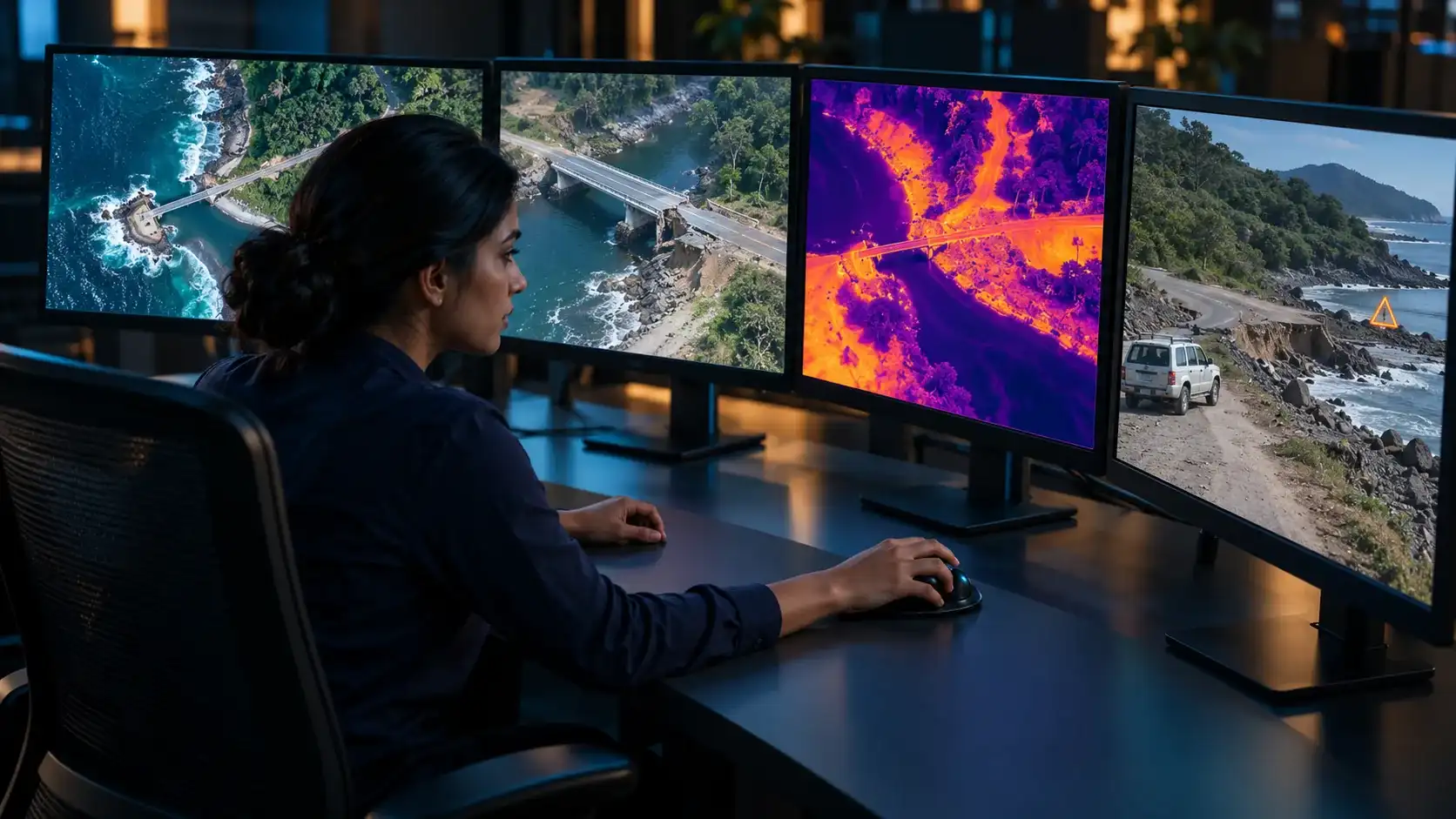
A vehicle crossing a boundary, unexpected activity near a protected site or an aircraft entering restricted airspace may need attention before a report can travel through the chain. Faster connectivity helps, but it cannot fix a workflow that depends on manual triage at every step.
The critical measure is not when a signal was captured. It is when someone capable of acting on it understood what it meant.
Automation should remove the repetitive sorting and cross-checking, not the human judgment that high-stakes decisions still require.
04What Happens When the Link Goes Down?
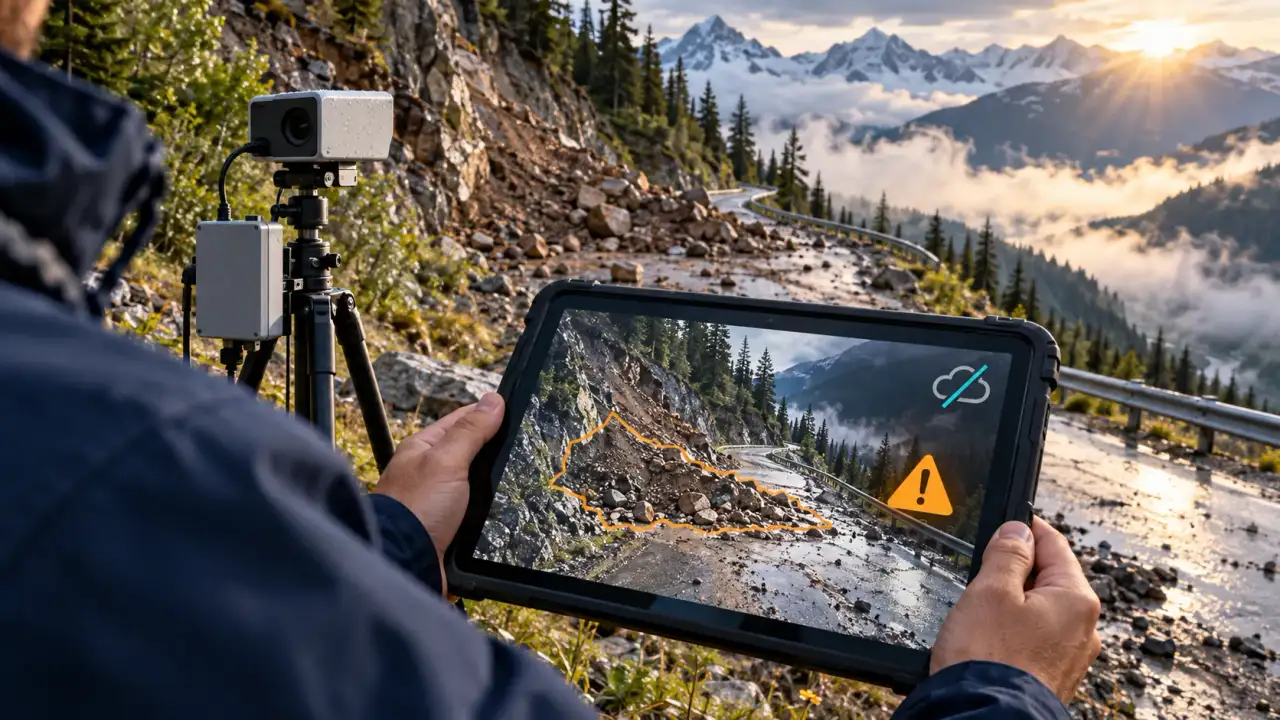
There is a weakness that polished demos rarely show: connectivity. Remote borders, offshore sites, disaster zones and contested environments may have limited access to a reliable link back to a central system.
If every detection must travel to the cloud before it becomes useful, teams can lose visibility exactly when conditions become hardest. Resilience means doing essential processing where the sensor is, while still supporting wider analysis whenever connectivity is available.
05Two Views. One Operational Picture.
The same event looks different depending on who must respond. A commander needs patterns across an area and over time. A field operator needs a clear alert, the relevant context and a sensible next step.
Strategic view
- Activity across a wider area
- Changes over days and weeks
- Patterns that inform planning
Tactical view
- Relevant local detections
- Context at the point of need
- Alerts without a manual relay
These should not be two conflicting versions of reality. Both should draw from the same connected intelligence so teams can move from shared understanding to coordinated action.
06From Sensor Fusion to Action
Closing the gap between collection and response calls for a connected architecture, not another isolated dashboard.
Connect the sources. Bring imagery, video and ground-sensor feeds into a common workflow, rather than leaving each stream in its own silo.
Correlate the signals. Use AI to identify relationships across feeds and prioritize what deserves a closer look, with human oversight where it matters.
Deliver intelligence by role. Give decision-makers the wider picture and teams on the ground timely, relevant alerts, including at the edge when the network is unreliable.
That is the shift from collecting intelligence to operationalizing it: making the right information useful to the right team at the right moment.
07Three Questions Worth Asking Your Team
If the answers expose a delay, the solution may not be another sensor. It may be a better way to connect the ones you already have.
The Bottom Line
Situational awareness is built, not bought.
Neuronix develops ISR and autonomy solutions for operations where fragmented feeds and delayed decisions carry real consequences. NeuroHawk is built to bring multi-sensor intelligence into one operational view, from strategic command to the tactical edge.
When the signal is already there, the next step is making sure it reaches the people who need it.