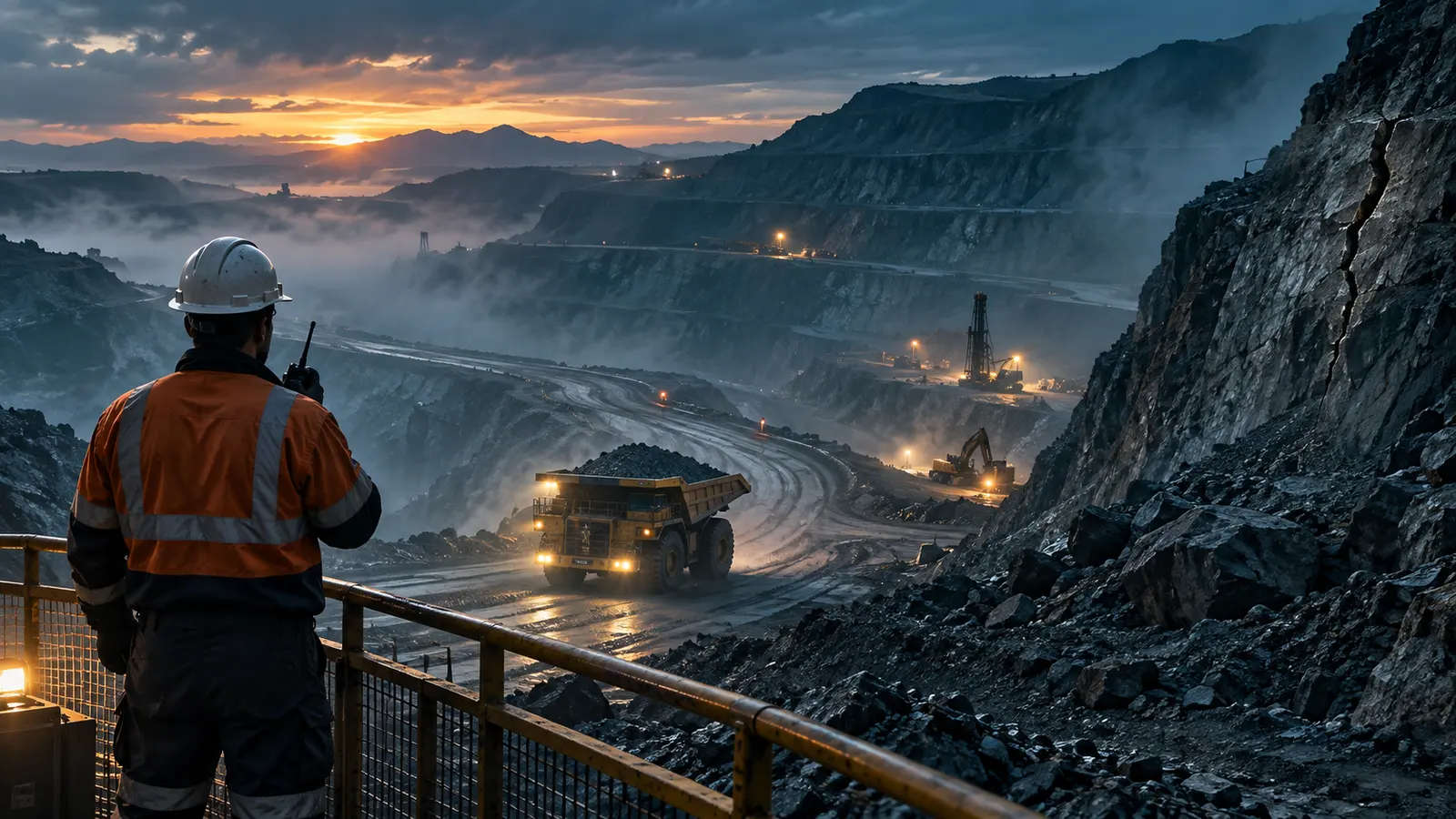
It is 4:47 a.m. at a remote pit. Nothing has gone wrong yet. But every part of the operation is one radio call away from going wrong.
The night-shift supervisor is waiting for a haul-truck driver to confirm that he has cleared a blast zone marked unstable six hours earlier. The geospatial survey that could settle the question sits unread on a laptop in the site office, three kilometres away. Nearby, a dozer idles below a slope that has not been reassessed since yesterday's rain.
This is the hidden reality of manual mine-site coordination: the operation may be generating data every second, yet the people who need it are still waiting for information to travel through radios, spreadsheets and shift handovers.
The cost rarely appears as a single line in a quarterly report. It surfaces instead as lost minutes, preventable downtime, unnecessary exposure and decisions made with an incomplete picture.
02A Day That Runs on Delay, Not Data
Walk through a typical shift at a remote mine and the same pattern appears across dispatch, surveying, safety and maintenance.
Fleet dispatch runs on voice and memory. Truck routes, loader assignments and haul sequences are coordinated over radio. Every change depends on someone receiving, remembering and acting on the call.
Geospatial insight arrives after conditions change. Drone and survey data can reveal slope movement, pit-wall instability or stockpile variation, but processing may take hours or days.
Safety incidents are documented, not anticipated. Near misses are logged after the fact, even when fatigue, equipment strain and weather patterns signalled risk earlier.
Asset performance depends on someone noticing. A truck losing efficiency, a conveyor running hot or a drill rig underperforming may remain invisible until production drops or equipment fails.
This is not a people problem. It is a coordination problem, and it becomes harder to control as sites grow more remote, fleets expand and shifts overlap.
03The Real Price of “We'll Catch It Next Time”
Manual coordination does more than slow a decision. It compounds risk in three ways:
Safety exposure
Every minute between detecting a hazard and communicating it is another minute that crews may be working with incomplete information.
Asset downtime
Fleet inefficiencies that a live system could flag in seconds may go unnoticed for an entire shift, quietly eroding production targets.
Decision lag at the worst moment
During a blast, severe weather or wall movement, sites relying on radio and spreadsheets are forced to react, often one step behind the event.
The danger is not a lack of data. It is the gap between a signal appearing and the operation acting on it.
04From Radio Calls to Real-Time Command
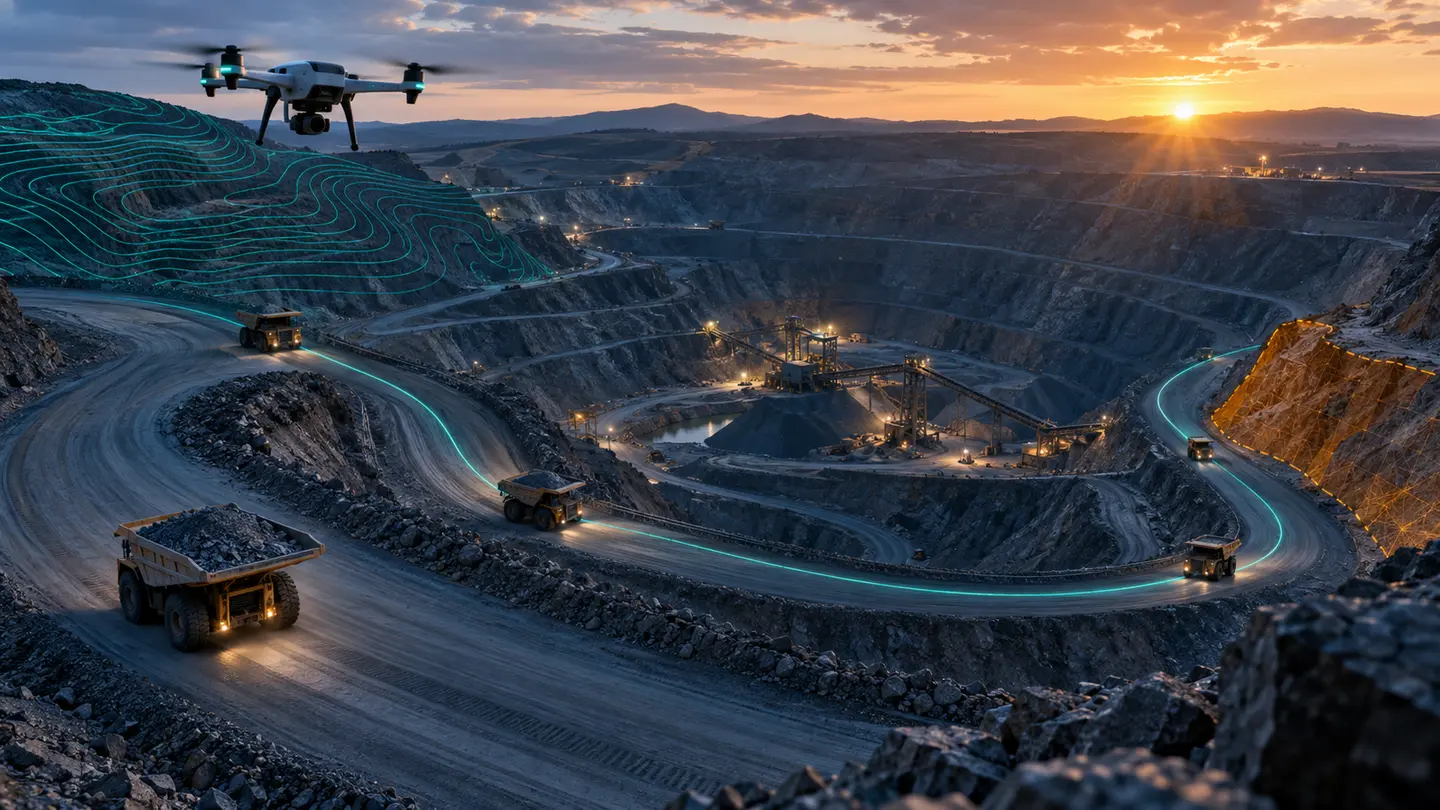
The answer is not more people on more radios. It is autonomous coordination: unifying fleet movement, geospatial intelligence, safety signals and equipment health into one continuously updated view.
NeuroMine, Neuronix's autonomous mining platform, is designed around that operating model. It combines robotics, AI-driven fleet coordination, live geospatial mapping and predictive analytics so mine teams can see what is happening on the ground, and respond before a warning becomes an incident.
Manual operation
- Information split across radios and laptops
- Survey insight reviewed after capture
- Routes changed through calls
- Maintenance triggered by visible decline
Autonomous coordination
- One live operational picture
- Continuous terrain and risk monitoring
- Routes adjusted around changing conditions
- Equipment issues flagged before failure
05What Changes on the Ground?
Return to that 4:47 a.m. shift. With autonomous coordination running beneath the operation, the blast-zone status is updated as survey data is captured, not hours later. Fleet routing adjusts around the identified risk instead of waiting for a supervisor to relay the change. The dozer approaching the slope is flagged before it is dispatched into danger.
The result is not automation for its own sake. It is faster operational awareness, clearer accountability and more time to act when the margin for error is at its smallest.
The Bottom Line
Every modern mine already runs on data: GPS pings, sensor feeds, survey scans and equipment telemetry. What many sites still lack is the system that converts those signals into a decision now, not a report tomorrow morning.
If your operation is coordinating a modern fleet through an analogue process, it is time to see what autonomous mining looks like in practice.